Jack Charles: The Rolling Home
interview
BY LUCY PENN
JANUARY 2025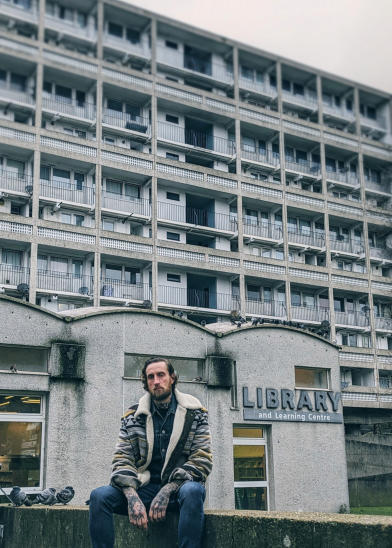

Raised in South West London, by hippie parents still hungover from the 60’s, Jack’s early years were
split between travelling Europe alongside his family and kicking footballs inside the cage on the estate
he grew up on. He describes his childhood as a mixture of Counterculture ideals and the
council-estate-of-mind.
Born in 1981 and a teen during the 90’s, early literary influences include Irvine Welsh’s Trainspotting,
and London Fields, by Martin Amis. Dropping out of school before taking his exams, Jack bounced
around, working menial jobs expressing himself by creating poetry, music and stories.
Inspired by his community, he developed a strong working-class voice, a tone which is prevalant
throughout his work.
Jack’s writing opts to explore the souls and sentiments of outlaws and outsiders, examining the
mentality of characters on the fringe of society, in the hope that, from their vantage point, his stories can
offer a wider perspective of the culture as a whole.
“The moment my secondary school English teacher banned me from his classroom.” Jack replies (laughing)
when I ask him when it was he knew he wanted to be a writer. On approach to the release of his debut novel,
Barley Sugar, I’ve travelled to South West London charged with the task of introducing a writer to his readers.
By the time we meet, outside Roehampton Library, its mid-morning and the January grey is already
indistinguishable behind the social housing.
“They’re just decoration,” he answers, knowing my first question is going to be whether there are meanings
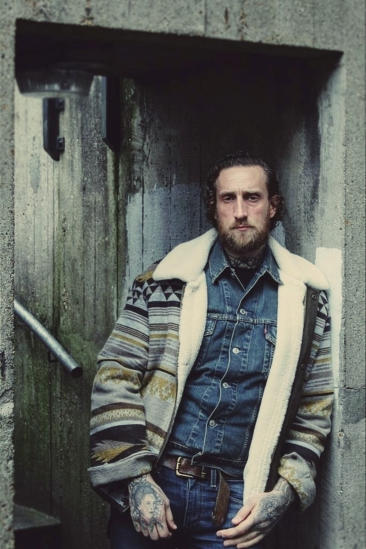
behind his tattoos. He traces my gaze to the Geisha on his right hand. “Except for her, she’s a character from a
story I haven’t written yet!”
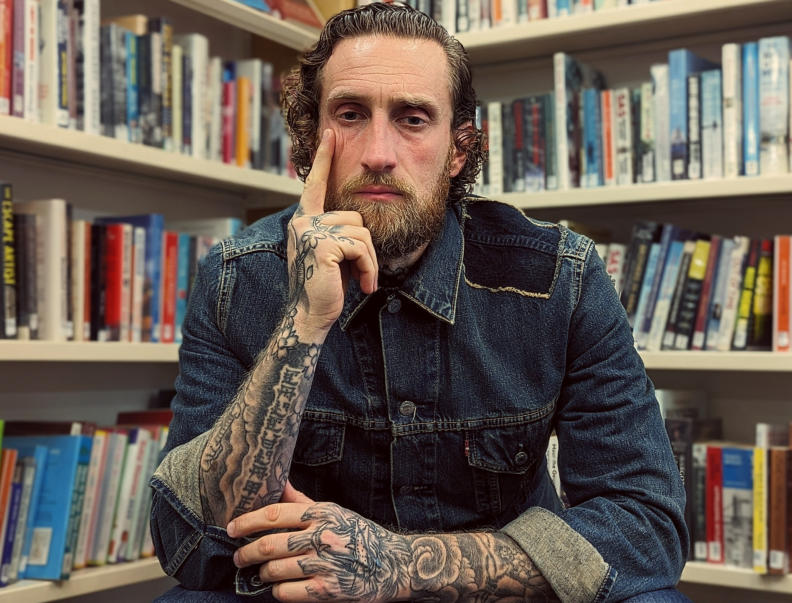
“Charles is my middle name,” he explains, taking a seat on the wall. He pauses, reluctanly allowing himself to
be photographed. “I heard once that people browse bookshelves from left to right, so, alphabetically
speaking, Charles stands a better chance of being randomly selected by someone in a rush at an airport.”
Clad in Levis and a tapestry jacket his appearance doesn’t immediately scream author. He glances across the
road, working his way along the parade of shops - a laundrette, an off licence and a chip shop - seemingly
searching for who exactly this article might be aimed at. “My first girlfriend lived in the block opposite this
library,” He reminisces, as we walk inside and settle onto a table in the corner.“We were only eleven; we used
to meet here sometimes.”
So, is that how you first fell in love with books? He shakes his head. “I grew up in the red brick blocks on the
other side of the underpass. We used to have a mobile library bus which pulled up on Tuesdays after school.
It was in there that I read my first crime caper, Fantastic Mr Fox. Something about the idea of the animals
triumphing over the men, of the crafty father pulling off a heist and getting one over on the greedy
landowners, completely captured my heart.”
When I produce my well-thumbed review copy of his novel, Jack smiles, apparently relieved that my line of
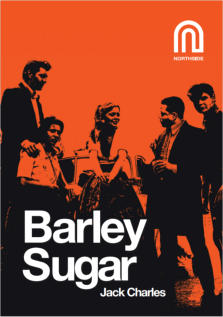
questioning is about to change. Barley Sugar has been described as a nostalgic London crime thriller. Whilst the
story undoubtedly explores themes of motherhood, brotherhood, revenge and redemption, what would you say
the novel is about?
“Love,” he answers, simply. “It’s about the brutality of love. Love in each of its carnations: maternal,
paternal, platonic and romantic.” He shifts in his seat. “It’s about relationships and the sacrifices people are
willing to make for them … sacrifices I think we’d all like to believe we’d be willing to make if we had to.”
I found myself joining hands with many of the characters, sometimes agaisnt my better judgment. At times, I
was so caught up, the book had me questioning my own morality. Was that your intention? “The intention was
to provoke thought. The characters are all tragedies of love, they’re all flawed. More intriguing than what
they do is why they’re doing it. Whether it’s justified or not is for each reader to decide.”
I must say, I had a lot of fun flashing back and seeing a side of the 1950’s we’ve seldom seen before. How did
you hit on Teddy Boys as subject matter? “It was the birth of the rebellious attitude within youth culture. I
could see a through-line, the beginning of a tradition in music and fashion which has been embraced by
working-class kids in every generation since. First Blues fathered Rock n Roll in the 50’s … then Rock
transformed through the counterculture in the 60’s, Metal in the 70’s, and it morphed into Punk in the 80’s.
By the 90’s, the anti-establishment mindset had evolved into the Hip Hop my generation grew up on. Each
decade looked and sounded different but the message stayed the same. And all that started with the Teds.
Plus they came with a cool look and ready-made soundtrack, it was perfect for the story I wanted to tell.”
Barley sugar is published by Northside House and due for release in July 2025.